UPY FBH Dean Attends First AFEBSI Congress, Strengthening Private Higher Education Collaboration
Dr. Tri Siwi Nugrahani, M.Si., Ak., CA., Dean of the Faculty of Business and Law (FBH) of Universitas PGRI Yogyakarta (UPY), attended the First Congress of the Indonesian Alliance of Private Faculties…
by Humas UPY
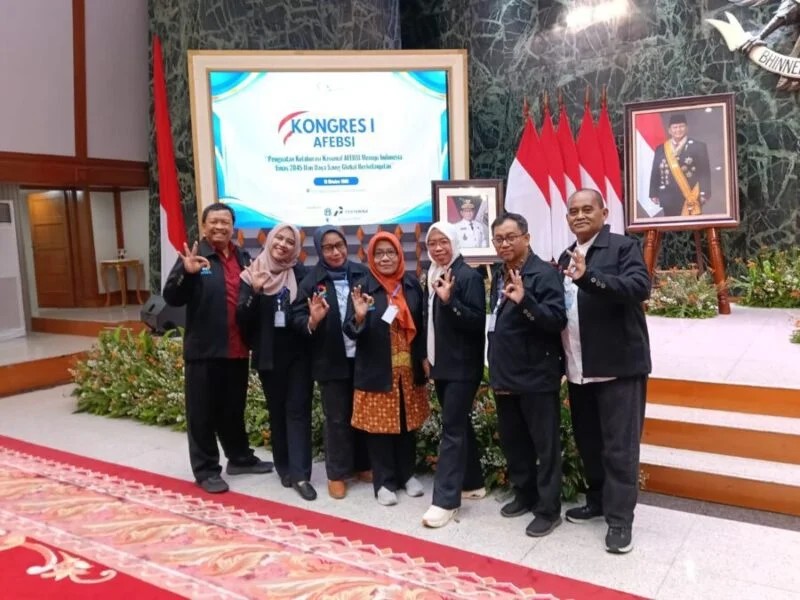
Dr. Tri Siwi Nugrahani, M.Si., Ak., CA., Dean of the Faculty of Business and Law (FBH) of Universitas PGRI Yogyakarta (UPY), attended the First Congress of the Indonesian Alliance of Private Faculties of Economics and Business (Aliansi Fakultas Ekonomi dan Bisnis Swasta Indonesia, AFEBSI), held on 13–15 October 2026 in Jakarta. This participation was part of efforts to expand academic networks and strengthen collaboration among private higher education institutions (perguruan tinggi swasta, PTS) in improving the quality of higher education in Indonesia.
The First AFEBSI Congress was officially opened by Jakarta Governor Pramono Anung Wibowo at Balai Agung, Jakarta City Hall, on Tuesday, 13 October 2026. Held under the theme “Penguatan Kolaborasi Nasional AFEBSI Menuju Indonesia Emas 2045 dan Daya Saing Global Berkelanjutan” (Strengthening AFEBSI’s National Collaboration Toward a Golden Indonesia 2045 and Sustainable Global Competitiveness), the event was attended by around 200 participants, consisting of representatives of member institutions, individual members, and members of AFEBSI’s central and regional boards from across Indonesia.
The participation of the UPY FBH Dean in the national forum was an opportunity to follow developments in higher education policy and collaboration, especially in economics and business. The forum also provided a space to exchange ideas on strengthening institutions, improving academic quality, and developing cooperation relevant to the needs of society and the business world.
About AFEBSI
AFEBSI is a forum that brings together deans of Faculties of Economics and Business and chairs of Schools of Economics (Sekolah Tinggi Ilmu Ekonomi, STIE) from private higher education institutions across Indonesia. By the time of the congress, the organization had 1,008 individual members and 143 institutions. That network is an asset for expanding partnerships and driving sustainable improvements in the quality of private higher education.
Through a spirit of collaboration, AFEBSI focuses on strengthening the implementation of the Tridharma of Higher Education, covering education, research, and community service. Synergy between campuses is expected to encourage the exchange of knowledge, expand cooperation opportunities, and produce academic contributions that benefit national development.
Opening Remarks
In the opening remarks, Jakarta Governor Pramono Anung Wibowo emphasized that education plays a strategic role in improving public welfare and opening wider opportunities for the younger generation.
“Education is an important instrument for breaking the cycle of poverty and expanding opportunities for people to improve their welfare,” Pramono said.
Pramono also shared the idea of developing a scholarship program in Jakarta modeled on the spirit of the Indonesia Endowment Fund for Education (Lembaga Pengelola Dana Pendidikan, LPDP), to expand access to quality education. In Pramono’s view, education is not only a means of increasing knowledge, but also a foundation for social mobility, stronger competencies, and access to decent work.
These challenges require higher education institutions to keep adapting to the needs of the world of work and the dynamics of the economy. The development of higher education must therefore be accompanied by more relevant learning, stronger graduate competencies, and partnerships that meet the real needs of society.
Achmad Rozi, General Chairperson of the AFEBSI National Executive Board (Dewan Pengurus Nasional, DPN), expressed appreciation to the Jakarta Governor and the Jakarta Provincial Government for their support for the congress.
AFEBSI hopes that support will open wider opportunities for cooperation with the government, at both the central and regional levels. The organization is also committed to helping its members build networks with higher education institutions at home and abroad, as well as with the business world.
Meanwhile, Arif Murti Rozamuri, Chair of the First AFEBSI Congress Committee, emphasized the importance of the contribution of faculties of economics and business and STIE in supporting national development and achieving the Sustainable Development Goals (SDGs).
According to Arif, the academic and research capacity of higher education institutions can be used to strengthen the empowerment of micro, small, and medium enterprises (MSMEs), develop entrepreneurship, improve financial literacy, create jobs, and encourage sustainable business practices.
That idea aligns with the importance of building closer ties among higher education institutions, the government, the business world, and society. Through cross-sector cooperation, universities are expected to extend the benefits of knowledge while helping to address development challenges.
A New Leadership Term
During the congress, Achmad Rozi was re-elected by acclamation as General Chairperson of the AFEBSI National Executive Board (DPN) for the 2026–2031 term. Under this leadership, the organization is expected to continue developing, maintain program continuity, and strengthen collaboration among member institutions.
Johan Arifin, Chair of the AFEBSI Yogyakarta Regional Executive Board (Dewan Pengurus Daerah, DPD), said leadership continuity is important for supporting the organization’s future development. The Yogyakarta delegation at the congress included Johan Arifin, Edy Suandi Hamid, Hasim As’ari, Jumadi, Tri Siwi Nugrahani, Wisnu Prajoga, Audita Nuvriasari, Nur Widiastuti, Lilik Ambarwati, Handoko Arwi Hasthoro, and Y. Sri Susilo.
Y. Sri Susilo, Secretary of the AFEBSI Yogyakarta Regional Executive Board (DPD), explained that the congress’s second- and third-day agenda included community service activities and member capacity building. The series of events is expected to broaden AFEBSI’s contribution to higher education development and national development.
For UPY, participating in a national academic forum such as the First AFEBSI Congress is part of efforts to broaden horizons, build networks, and open collaboration opportunities that support improvements in the quality of higher education. Through synergy between institutions, private higher education institutions are expected to keep growing into adaptive, high-quality educational institutions that contribute to society and remain competitive at the global level.